
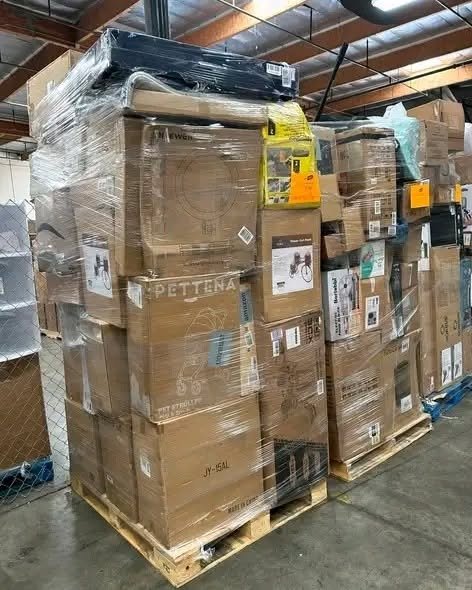
Liquidation pallets can give resellers, discount stores, online sellers, flea-market vendors, and small retailers access to large quantities of merchandise without paying traditional retail prices.
But buying liquidation inventory successfully is about much more than finding a pallet with a large advertised discount.
The real opportunity comes from understanding where the merchandise comes from, what condition it is in, how much you can realistically resell it for, what your total landed cost will be, and whether the products match your customers.
This guide explains how the liquidation pallet business works, what to look for before buying, how to evaluate potential inventory, and how to turn bulk merchandise into a repeatable resale strategy.
If you are ready to browse available inventory, you can also shop wholesale liquidation pallets, boxes and truckloads from Dax Pallets.
Table of Contents
- What Are Liquidation Pallets?
- Where Do Liquidation Pallets Come From?
- Types of Liquidation Pallets
- Understanding Pallet Condition
- Why Liquidation Pallet Manifests Matter
- How to Evaluate a Liquidation Pallet
- How Much Do Liquidation Pallets Cost?
- How to Buy Liquidation Pallets Safely
- How to Resell Liquidation Inventory
- Liquidation Pallets vs. Truckloads
- 9 Common Mistakes to Avoid
- Are Liquidation Pallets Worth Buying?
- Frequently Asked Questions
- Final Thoughts
What Are Liquidation Pallets?
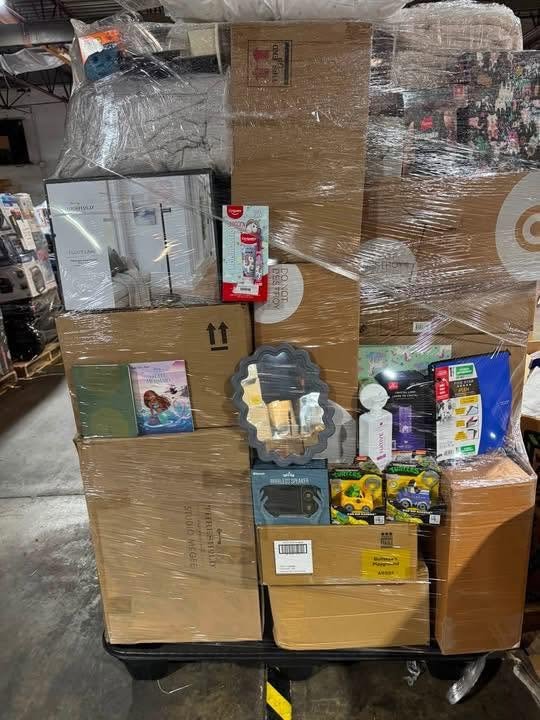
Liquidation pallets are bulk loads of merchandise that retailers, distributors, manufacturers, or other businesses need to move outside their normal retail inventory channels.
The merchandise may include overstock, customer returns, shelf pulls, open-box products, discontinued merchandise, store returns, or other excess inventory.
Instead of keeping these products in storage, businesses can move them through liquidation channels where buyers purchase merchandise in larger quantities.
For resellers, this creates an opportunity to purchase inventory at wholesale or liquidation prices and then sell individual products through online marketplaces, discount stores, local markets, auctions, or their own retail businesses.
However, liquidation is different from traditional wholesale.
A single pallet can contain products with different conditions and different resale values. Successful buyers therefore evaluate the entire load rather than focusing only on the original retail value.
If you are new to the industry, the Dax Pallets FAQ is another useful resource for understanding liquidation inventory.
Where Do Liquidation Pallets Come From?
Understanding the source of inventory helps you understand why two pallets can have completely different conditions.
Customer Returns
Customers return products for many reasons.
A product may have been unwanted, incorrectly ordered, lightly used, opened and tested, or returned because the packaging was damaged.
Some returned merchandise may be ready for resale. Other products may need cleaning, testing, repackaging, repair, or additional inspection.
For a deeper explanation of the reverse-logistics process, read What Happens to Returned Goods?.
Overstock Inventory
Overstock is merchandise that a retailer has more of than it currently needs.
This can happen because of seasonal changes, over-ordering, product launches, changing consumer demand, store closures, or warehouse consolidation.
For buyers, overstock can be attractive because merchandise may still be new and packaged, depending on the particular liquidation lot.
Shelf Pulls
Shelf pulls are products removed from retail shelves or sales channels.
They may have been discontinued, replaced by newer merchandise, moved to another location, or cleared to make room for new inventory.
The condition can vary, which is why buyers should review the specific listing and available inventory information.
Open-Box Merchandise
Open-box products have had their original packaging opened.
Some may have been inspected or lightly handled, while others may require additional testing before being offered for resale.
Types of Liquidation Pallets
There is no single type of liquidation pallet that works for every reseller.
The right choice depends on your customers, selling platform, budget, storage capacity, product knowledge, and ability to inspect inventory.
Amazon Liquidation Pallets
Amazon-related liquidation inventory can include general merchandise, shoes, electronics, home goods, tools, and other categories.
See the current Amazon liquidation pallets and truckloads available from Dax Pallets.
Home Depot Liquidation Pallets
Home improvement inventory can be attractive to hardware stores, contractors, online sellers, and local resellers.
Available merchandise can include tools, hardware, outdoor equipment, appliances, flooring, and other home-improvement products.
Browse the current Home Depot liquidation pallets and truckloads.
Electronics Liquidation Pallets
Electronics can include phones, laptops, tablets, headphones, accessories, televisions, smart devices, and other consumer technology.
Electronics require careful evaluation because model numbers, functionality, accessories, battery condition, compatibility, and product condition can have a major effect on resale value.
Dax Pallets also offers dedicated Apple wholesale inventory and other electronics-related products.
Tools and Hardware Pallets
Tools can be attractive for resellers because many products have established demand among contractors, DIY customers, hardware shops, and online buyers.
Dax Pallets currently lists wholesale tool pallets, including DeWalt and Milwaukee inventory.
General Merchandise Pallets
General merchandise pallets can contain a mixture of household products, consumer goods, accessories, and other inventory.
Mixed loads can provide variety, but they may also require more sorting, testing, photographing, pricing, and listing work.
Understanding Pallet Condition
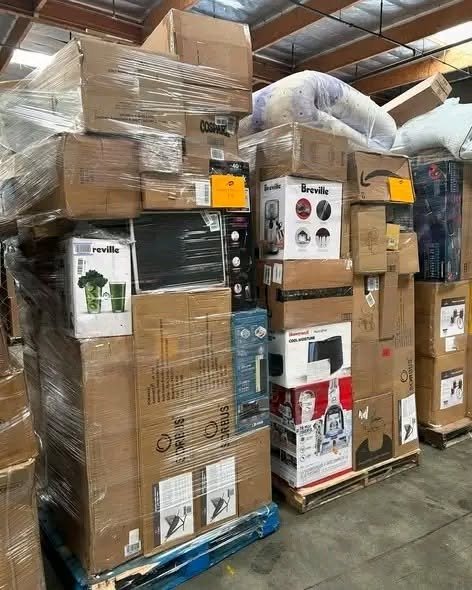
One of the biggest mistakes new buyers make is assuming every product on a pallet is brand new.
Condition affects both resale value and the amount of work required before an item can be sold.
New
The product is unused and generally remains in new condition.
Overstock
Merchandise that exceeds the retailer’s current inventory requirements.
Overstock can sometimes provide attractive opportunities when products remain new and packaged.
Open Box
The original packaging has been opened.
The product may have been inspected, tested, or handled.
Customer Return
The product has been returned by a customer.
Condition can vary significantly from unused to used or defective.
Shelf Pull
The product was removed from a retail shelf or sales channel, often because the product was discontinued or replaced.
Salvage
Salvage merchandise requires greater caution because products may be damaged, incomplete, defective, or suitable primarily for parts or recovery.
Never calculate profitability using retail value alone.
Your calculation should consider realistic resale value after freight, marketplace fees, labor, repairs, packaging, storage, and unsellable merchandise.
Why Liquidation Pallet Manifests Matter
A manifest can be one of the most useful pieces of information available to a liquidation buyer.
Depending on the load, a manifest may provide information such as:
- Product descriptions
- Brand names
- Model numbers
- Quantities
- SKUs
- Condition information
- Estimated retail values
A manifest does not automatically make a pallet profitable.
Instead, it gives you information that can help you make a better buying decision.
Before purchasing, research actual resale prices for comparable products.
Do not assume an item’s original retail price is the amount you will receive when reselling it.
A product originally sold for $500 at retail does not necessarily mean a reseller can sell that product for $500 today.
Demand, condition, model age, competition, accessories, and selling fees all matter.
How to Evaluate a Liquidation Pallet
A profitable purchase begins before the order is placed.
1. Identify the Actual Products
Look beyond the category name.
An electronics pallet, for example, could contain premium devices, older models, accessories, open-box products, or damaged merchandise.
The more you understand about the actual inventory, the easier it becomes to estimate its potential resale value.
2. Check the Condition
Determine whether the merchandise is new, overstock, open-box, shelf pull, customer return, refurbished, or salvage.
Condition should directly influence the price you are willing to pay.
3. Research Resale Prices
Compare comparable products across several sales channels.
Look at realistic selling prices rather than relying exclusively on MSRP.
The goal is to determine what buyers are actually willing to pay.
4. Calculate Your Total Cost
Your real investment can include:
Pallet price + freight + taxes/duties + marketplace fees + packaging + repairs + storage + labor.
For international purchases, freight, insurance, duties, taxes, customs clearance, and shipping responsibilities can also affect the final landed cost.
The U.S. Commercial Service shipping guidance provides useful information about shipping arrangements and international trade responsibilities.
5. Estimate Recoverable Value
Ask yourself:
How much money can I realistically recover from this inventory?
This is usually more useful than looking at a theoretical retail value.
If you expect some products to be damaged, incomplete, or difficult to sell, account for that before purchasing.
6. Match the Pallet to Your Customers
A pallet that works well for an eBay seller may not work for a flea-market vendor.
Choose merchandise that matches the customers you already understand.
A reseller who already sells tools may have a much easier time moving a tool pallet than someone with no established market for hardware products.
How Much Do Liquidation Pallets Cost?
There is no universal price for a liquidation pallet.
Pricing can vary according to:
- Product category
- Brand
- Quantity
- Condition
- Estimated resale value
- Market demand
- Manifest availability
- Freight costs
- Location
A general merchandise pallet can have a completely different price from a pallet containing premium electronics or branded tools.
The better question is not:
“How cheap is this pallet?”
Instead ask:
“What is my all-in cost, and what can I realistically recover from this inventory?”
That change in thinking can help you avoid buying inventory simply because the advertised discount looks impressive.
How to Buy Liquidation Pallets Safely
Finding a cheap pallet is easy.
Finding a supplier you can confidently work with is more important.
Before buying, research the supplier, review the product information, examine the available photographs, understand the condition, and confirm the shipping and purchasing terms.
The Federal Trade Commission’s guidance on buying from online marketplaces recommends researching sellers, reviewing policies, checking seller information, and taking precautions when purchasing online.
Questions to Ask Before Buying
Before placing an order, consider asking:
- What is the condition of the merchandise?
- Is a manifest available?
- Are photographs of the actual inventory available?
- Has the inventory been inspected?
- What does the listed price include?
- How much will freight cost?
- What are the return or claim terms?
- Are there minimum purchase requirements?
- Where does the inventory ship from?
- Are additional taxes or duties applicable?
Keep copies of invoices, product descriptions, payment records, shipping documents, and correspondence.
For Dax Pallets customers, the How to Order from Dax Pallets page explains the purchasing process and available ordering methods.
How to Resell Liquidation Inventory
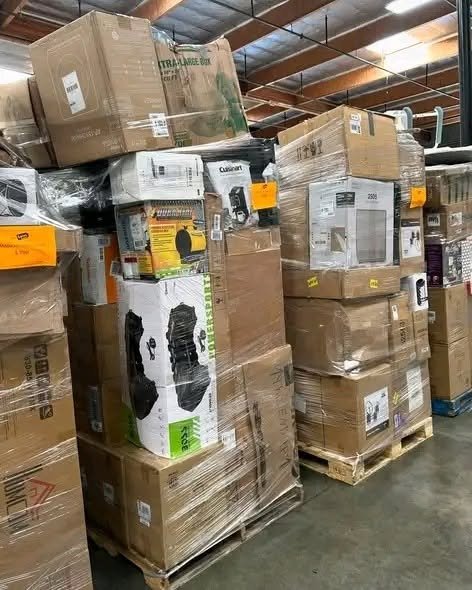
Buying the inventory is only half of the business.
The second half is turning bulk merchandise into individual sales.
Step 1: Document the Shipment
Photograph the pallet and its packaging when it arrives.
Keep records of labels, visible damage, product quantities, and other useful information.
This documentation can help you compare the shipment against your purchase information.
Step 2: Sort the Inventory
Separate merchandise into groups such as:
- Ready to sell
- Needs cleaning
- Needs testing
- Needs repair
- Parts or salvage
- Unsellable
Sorting gives you a clearer picture of the actual inventory you received.
Step 3: Test Products
Test electronics, appliances, tools, and other functional products before listing them.
Testing helps you create more accurate listings and can reduce avoidable customer complaints.
Step 4: Create Accurate Listings
Use clear photographs, accurate titles, relevant specifications, and honest condition descriptions.
Avoid exaggerating product condition.
An accurate listing can help build customer trust and reduce returns.
Step 5: Select the Right Sales Channel
Depending on the merchandise, you could sell through:
- Your own website
- eBay
- Facebook Marketplace
- Local marketplaces
- Flea markets
- Discount stores
- Auctions
- Social commerce
- Other wholesale buyers
Different products perform differently across different channels.
A bulky household item may be easier to sell locally, while a small branded electronic product may be suitable for an online marketplace.
Step 6: Track Your Actual Numbers
Record what each product cost you and what it eventually sold for.
After several purchases, your own sales data can reveal which categories provide the best combination of margin, demand, and manageable workload.
That information becomes increasingly valuable as your business grows.
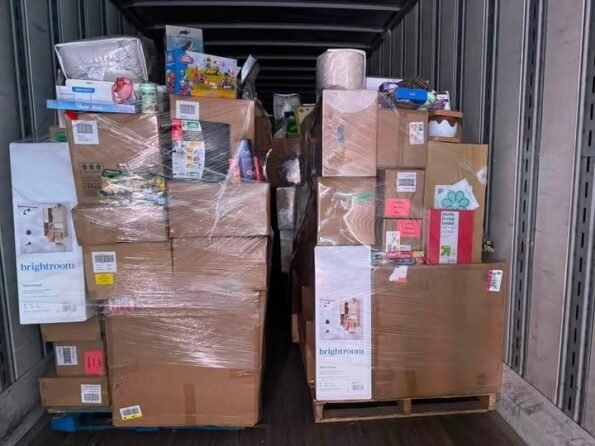
Liquidation Pallets vs. Truckloads
Pallets and truckloads are suited to different types of buyers.
A single pallet generally requires less capital, less storage space, and less operational capacity.
A truckload provides substantially more inventory but also increases your financial exposure if the products do not sell as expected.
For a new reseller, starting with a manageable quantity can be a sensible way to learn the process.
Once you understand your customers, storage capacity, selling channels, and average recovery rate, scaling to larger loads can make more sense.
You can browse current liquidation truckloads from Dax Pallets when you are ready to scale your inventory purchasing.
Dax Pallets also provides wholesale inventory across categories including Amazon, Home Depot, Apple, tools, Target, and other merchandise. View current wholesale inventory.
9 Common Liquidation Pallet Mistakes to Avoid
1. Buying Only Because the Discount Looks Huge
A large discount does not automatically mean the inventory will sell.
Always look at the actual products and realistic resale prices.
2. Confusing Retail Value With Resale Value
MSRP is not the same as your expected cash recovery.
3. Ignoring Freight
Transportation can change the economics of a purchase dramatically.
Always calculate the delivered or landed cost before deciding what you are willing to pay.
4. Not Checking Condition
Returns and open-box products can require additional work.
Make sure you understand what you are buying.
5. Buying Without Knowing Your Customer
Inventory should have a realistic sales destination before you purchase it.
6. Underestimating Storage
A pallet becomes many individual products once it is sorted and prepared for resale.
Make sure you have enough space to receive, organize, test, and store your inventory.
7. Forgetting Selling Fees
Marketplace fees, payment processing, packaging, advertising, and shipping can reduce your final margin.
8. Scaling Too Quickly
Do not jump from one pallet to multiple truckloads before you understand your sales process.
9. Choosing a Supplier Without Research
Supplier communication, product information, policies, documentation, and transparency all matter.
Are Liquidation Pallets Worth Buying?
They can be.
But successful buyers do not depend entirely on luck.
They build a repeatable process.
They research products before buying.
They calculate total costs.
They understand condition.
They inspect merchandise.
They choose products that fit their customers.
And they track actual sales rather than relying on estimated retail values.
That is the difference between buying cheap inventory and building a liquidation resale business.
If you are ready to source inventory, browse Dax Pallets liquidation inventory or learn how to order liquidation pallets from Dax Pallets.
Frequently Asked Questions About Liquidation Pallets
What are liquidation pallets?
Liquidation pallets are bulk loads of merchandise sold outside a retailer’s normal sales channel. They may contain overstock, customer returns, shelf pulls, open-box merchandise, or other excess inventory.
Are liquidation pallets profitable?
They can be profitable when the buyer purchases inventory at an appropriate price, understands the condition, controls operating costs, and has an effective resale channel.
Profitability depends on the actual cost of the inventory and how effectively the buyer can resell it.
What should I look for when buying liquidation pallets?
Look at the product category, condition, manifest, photographs, estimated resale value, pallet price, freight cost, supplier reputation, and purchasing terms.
Are customer-return pallets always damaged?
No.
Customer returns can range from unused products to opened, used, incomplete, or defective merchandise.
The condition depends on the specific liquidation lot.
Should beginners buy pallets or truckloads?
For many beginners, a pallet or smaller lot is easier to manage because it requires less capital and storage capacity.
After establishing a reliable resale process, larger loads may become appropriate.
Can I buy liquidation pallets online?
Yes.
Many suppliers offer online listings where buyers can review available inventory, product information, pricing, and purchasing information before placing an order.
Final Thoughts on Liquidation Pallets
The liquidation market rewards buyers who replace guesswork with research.
The goal is not simply to find the cheapest pallet.
The goal is to find the right inventory at the right price for the right customer.
Once you understand product condition, manifests, realistic resale values, freight, operating costs, and your own sales channels, liquidation pallets can become a repeatable source of inventory rather than a one-time buying experiment.
Start with manageable quantities.
Track every purchase.
Learn which products sell fastest.
Improve your buying decisions with every load.
When you are ready to scale, move from individual pallets to larger wholesale lots and truckloads based on actual sales data rather than assumptions.
Ready to start sourcing? Explore Dax Pallets liquidation pallets, boxes and truckloads.
Pingback: Best Items To Resell From Liquidation Pallets: 15 Proven Picks For 2026